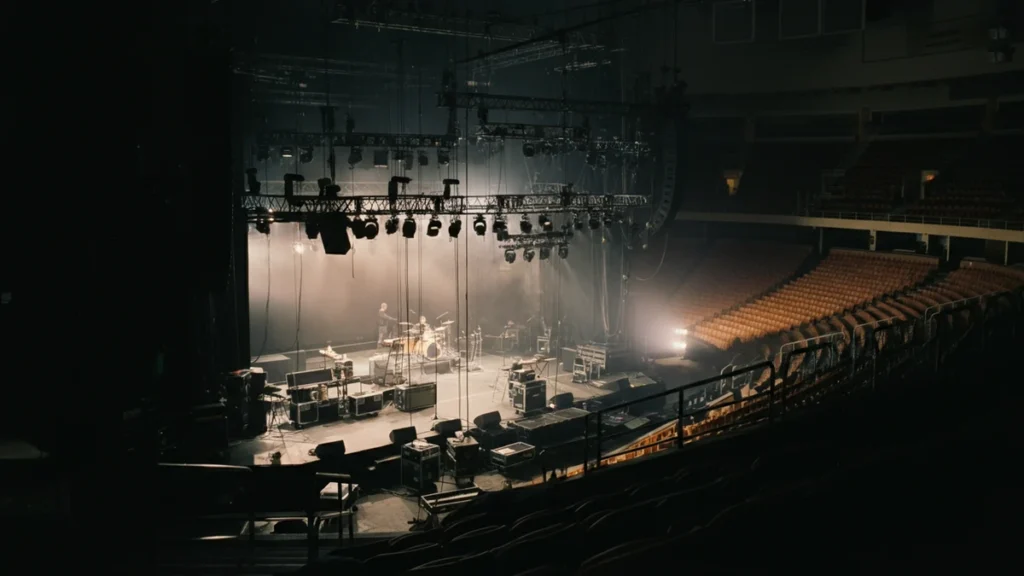
An empty arena stage being set up by a road crew under dramatic work lights, viewed from the seats. | IndieRock.News
The Album Cycle Is Dead, Long Live the Tour Cycle
The music industry’s foundational rhythm has shattered. For decades, the process was simple: an artist records an album, releases it, tours to support it, and then takes a break. Then they’d write the next one. But in the 2020s, this model feels increasingly antiquated. Both new and established acts need a new, more dynamic approach. The future of tour cycles for pop rock artists is evolving in real-time. It’s less about album release dates and more about viral moments, fan demand, and the harsh economic truth: live performance reigns supreme.
Streaming platforms like Spotify generate fractions of a cent per stream. This has dramatically shifted the financial landscape for artists. Now, they make their money on the road. This isn’t a new idea. However, the speed and scale needed to profit from touring have grown unprecedentedly fast. A hit song on TikTok can make someone a global superstar overnight, but that fame doesn’t last forever. The challenge is to turn online popularity into real, ticket-buying fans before algorithms change. This pressure is fundamentally reshaping tour cycles for pop rock artists, creating new paths to success for 2026 and beyond.
The Instant Arena Tour: Sabrina Carpenter‘s Blueprint
No artist shows this new model better than Sabrina Carpenter. Her 2024 career path offers a masterclass in seizing momentum. After her single “Espresso” became a massive global hit, she didn’t wait. She quickly released another smash hit, “Please Please Please”. Soon after, she announced her upcoming album, “Short n’ Sweet”.
Importantly, the album announcement included a massive global arena run: the “Short n’ Sweet Tour”. This tour wasn’t booked months after the album’s release. Instead, it was a key part of the initial launch. The strategy is simple: capture the moment. When the tour starts, fans will have listened to both singles for months. They’ll also have a new album to enjoy. Sabrina Carpenter and her team believe her rapid cultural presence will lead directly to sold-out arenas. This is a high-risk, high-reward plan. It turns a viral moment into an immediate, large commercial venture. This fast-paced strategy will likely become a model for future tour cycles for pop rock artists who get a sudden, chart-topping hit.
The Slow Burn: Chappell Roan’s Grassroots-to-Arenas Method
Sabrina Carpenter is like a lightning strike. In contrast, Chappell Roan is a slow, steady fire that grew into an inferno. Her success shows a compelling alternative path. Her debut album, “The Rise and Fall of a Midwest Princess”, didn’t become a sensation overnight. Its triumph came from years of relentless work. She built a devoted fanbase one show at a time.
The Midwest Princess Tour offers a great example of organic growth. It started in smaller clubs and theaters. Word-of-mouth and a unique, engaging live show fueled its success. This show created a deep sense of community among her fans. As her album gained traction and her songs became queer anthems, the venues grew larger. The tour itself became a phenomenon, a traveling celebration that fans felt connected to. Eventually, Chappell Roan opened for Olivia Rodrigo on the Guts World Tour. She also played huge festival slots like Coachella. By then, she was a seasoned headliner who could clearly sell tickets. Her journey proves that the traditional way of building a career on the road isn’t dead. Social media has simply supercharged it, as clips from her shows helped spread her message.
Projecting to 2026: Hybrid Models and Constant Presence
Looking ahead to 2026, the most successful tour cycles for pop rock artists will likely combine these two models. The future demands flexibility and constant readiness. Pop rock bands like The 1975 and Paramore have long experimented with different tour formats. They’ve played everything from intimate shows to huge stadium runs. This shows an adaptability that everyone now needs.
An artist might follow the Chappell Roan model for years, building a fanbase through consistent touring. Then, if a single song goes viral, they must be ready to switch to the Sabrina Carpenter model. This means launching an arena tour on short notice to meet sudden demand. So, tour logistics, stage production, and marketing plans must develop simultaneously. They need to be ready for instant deployment. The ‘break’ part of the album cycle is fading. It’s replaced by a constant hum of activity. This includes one-off festival headline slots at places like Lollapalooza, regional mini-tours, and a steady online presence. These efforts keep fans engaged between major announcements. We see this with artists like Billie Eilish. Her Hit Me Hard and Soft: The Tour was announced with military precision. It covered the globe in a way that felt both carefully planned and culturally dominant.
The Challenges of the New Touring Era
This new, accelerated era of touring brings significant challenges. Artist burnout is the most pressing issue. An ‘always on’ cycle places immense physical and mental strain on performers and their crews. Many find the pressure to constantly create content, engage with fans online, and perform at a high level every night to be immense and unsustainable.
Fans are also feeling the squeeze. Major players like Ticketmaster and its parent company Live Nation dominate the market. This has caused widespread frustration. Issues include dynamic pricing, exorbitant fees, and a difficult ticket-buying experience. Artists tour more than ever to earn a living. However, high ticket costs are pricing out many fans. The biggest challenge for the live music industry by 2026 is finding a sustainable model. This model must work for artists, crews, and fans. The future of tour cycles for pop rock artists relies on solving this complex problem. It means balancing artistic health, fan access, and economic viability.
This forward-planning is becoming a new standard. The strategy behind the Mitski 2026 tour announcement also shows how artists are building massive fan anticipation well in advance.
Stay Ahead of the Music Industry Curve
The evolution of touring is just one piece of the rapidly changing music industry puzzle. From AI-driven music creation to new platforms for fan engagement, the landscape is shifting under our feet. Staying informed is the key to navigating these changes, whether you’re an artist, a manager, or a dedicated fan. For deeper insights and tools to help you build your career in this new environment, explore the resources available at MW3.biz.
About Author