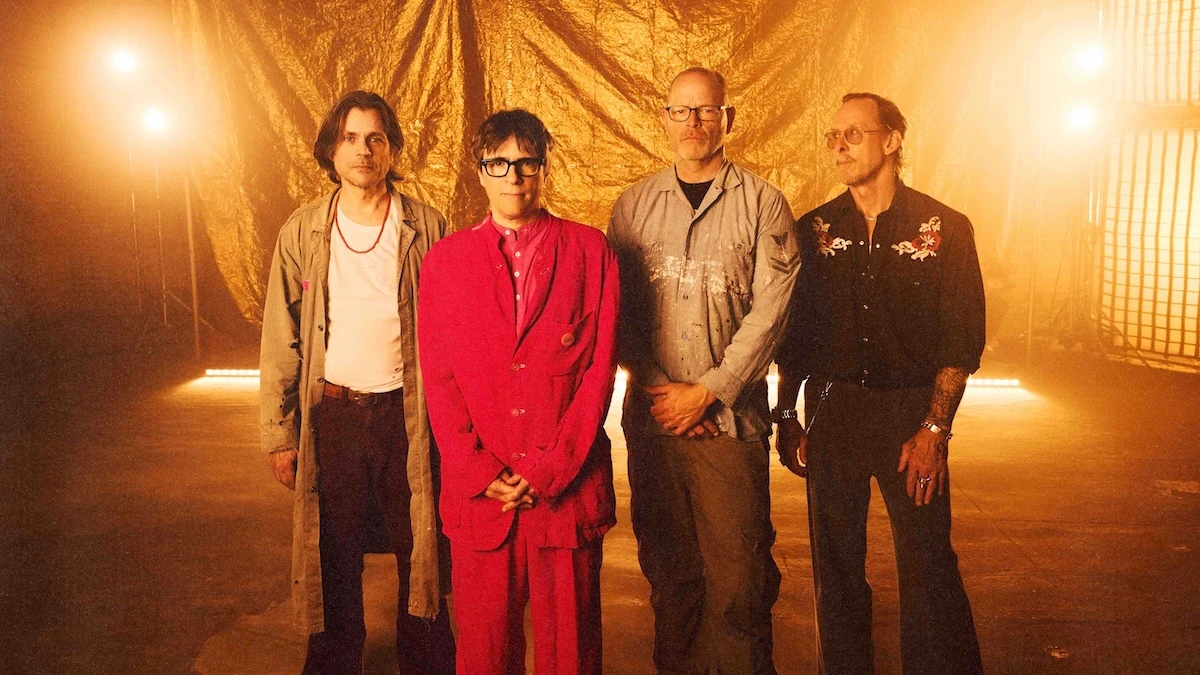


Nine songs. That is the whole of Reality Awaits, the first album The Strokes have released since 2020, and the number is the first thing worth registering about it. Six years of silence has produced a record shorter than most bands’ debuts.
The tracklist runs Psycho Shit, Dine N’Dash, Lonely in the Future, Falling Out of Love, Going to Babble On, Going Shopping, Liar’s Remorse, The Fruits of Conquest and Pros and Cons. Going Shopping arrived first, in April, alongside album artwork and an announcement video styled like an old car advertisement.
The Release Date Moved Twice
The album was originally set for 26 June via RCA Records. In June, Exclaim! reported that a press release circulated on the band’s behalf had pushed it back four weeks to 24 July, while pre-order listings still appeared to show physical copies shipping around the original date.
A four-week slip is unremarkable in itself. What makes it worth noting on this record is the pattern: this is a band that has never operated to a conventional album cycle, and the delay landed after the artwork and lead single were already public. The commercial machinery had started before the release date was settled.
What the Reviews Actually Say
Jon Dolan’s Rolling Stone review is titled Reality Bites a Little Too Hard, and describes the album as “an at times thrilling, often inscrutable, sometimes straight-up bizarre addition to their story”.
That is a more interesting verdict than a straightforwardly good or bad one. Thrilling and inscrutable in the same sentence describes a record that is doing something on purpose rather than failing to do something else, and it is consistent with where Julian Casablancas’ songwriting has been pointing for over a decade.
Dolan also makes a point about the band’s standing that is easy to miss. “The Strokes’ stock is pretty high in 2026,” he writes, “definitely higher than it was in 2016, and maybe even 2006.” For a band whose reputation was supposedly built and spent inside the first two albums, that is a substantial claim, and it is supported by something measurable.
The Adults Are Talking Now Matches Last Nite
The New Abnormal, released in 2020, “got a little lost in the Covid malaise”, as Dolan puts it. Its standout track, The Adults Are Talking, has since accumulated as many streams as Last Nite.
That comparison does a lot of work. Last Nite is one of the songs that defined a decade of guitar music and has had twenty-five years to accumulate plays. The Adults Are Talking has had five. A song from the band’s least-noticed album catching one of its foundational singles is evidence that the audience did not simply stop at the early records, and it partly explains why a 2026 album from this band is a genuine event rather than a legacy exercise.
This is also the twenty-fifth anniversary year of Is This It, and the band’s recent tour was their first in two decades. Dolan describes the crowd it drew as “a multigenerational audience of young olds and old youngs”, which is a neat description of what happens when a catalogue outlives the scene that produced it.
Nine Songs Is a Statement, Not an Accident
Short albums have become common again, largely because streaming economics reward completion rates over duration. But nine tracks after six years reads differently from nine tracks on an annual release schedule.
The practical effect is that every song has to justify its place, and a listener notices any that does not. On a sixteen-track record a strange song is a detour. On a nine-track record it is a sizeable fraction of the whole, which is why an album described as “often inscrutable” and “sometimes straight-up bizarre” feels more pronounced at this length than the same material would across a longer sequence.
The titles support that reading. Psycho Shit, Dine N’Dash and Going to Babble On are not the titles of a band aiming for radio, and Going Shopping as lead single is a deliberately flat, unglamorous choice for a first taste after six years away.
The Post-Post-Strokes Problem
Dolan makes one further observation with real consequences: “the biggest indie band around, Geese, is undeniably post-post-Strokes, even if the band members were still in their strollers back when Julian, Albert, Fab, Nick, and Nikolai owned the night.”
This is the structural difficulty facing any Strokes album now. Their early records did not just succeed, they established a template that two subsequent generations of guitar bands have worked through. A band returning into a landscape shaped by its own influence has two options, and neither is comfortable.
Playing to the template invites the charge of repeating what younger bands are already doing more urgently. Departing from it invites the complaint that the band no longer sounds like itself. An album that arrives “inscrutable” and “bizarre” is fairly clearly the second choice, made knowingly.
What the Titles Give Away
Reading a tracklist before hearing a record is guesswork, but this one is unusually legible. Falling Out of Love and Lonely in the Future are the only two that read as conventional song titles, and both point at the strain of alienation that has run through the band’s writing since the first album.
The rest are jokes of a particular kind. Dine N’Dash names a small act of theft. Going Shopping and Going to Babble On are flat, almost anti-poetic constructions, the second carrying a groan-worthy pun on Babylon that the band have not bothered to disguise. Liar’s Remorse and The Fruits of Conquest deploy the register of moral vocabulary while attaching it to nothing specific. Pros and Cons closes the sequence with the language of a spreadsheet.
Taken together they describe a record more interested in deadpan than in feeling, which is consistent with a review calling it inscrutable. Casablancas has spent much of his solo work pulling further from earnestness, and a tracklist this dry suggests the pull has continued into the band’s material rather than being reserved for side projects.
It also explains why Going Shopping works as a lead single despite being the least dramatic title available. Choosing it signals the tone before a note plays, and any listener expecting the romantic melancholy of the early records has been warned in advance.
Where It Sits in the Catalogue
The band’s discography has followed a consistent shape since the third album: records that divide their audience on release and settle into the catalogue afterwards. The New Abnormal is the clearest case, initially received as a competent return and now producing a song that streams at the level of their most famous single.
Reality Awaits will likely follow the same pattern, and the review language suggests it. Descriptions like inscrutable and bizarre are what critics reach for when a record does not resolve on first listen, and those are frequently the records that hold up longest.
The band spent the year touring heavily across the United States, including festival appearances, so the material has an immediate live context rather than arriving as a studio artefact. That matters for these songs in particular: a nine-track album played to a multigenerational crowd will establish very quickly which of them work in a room.
What is certain is that the band is not operating from a weak position. High standing, a catalogue still gaining listeners, an anniversary year, and a returning live audience is an unusually strong platform from which to release a difficult record. Making a deliberately awkward album at the point of maximum goodwill is a choice available to very few bands, and this one has taken it.
The scene-level version of this argument plays out constantly on smaller records too. Our recent piece on how Maryann Connolly cranked Who Whatever louder and four countries answered covers a very different scale of the same question.
About Author