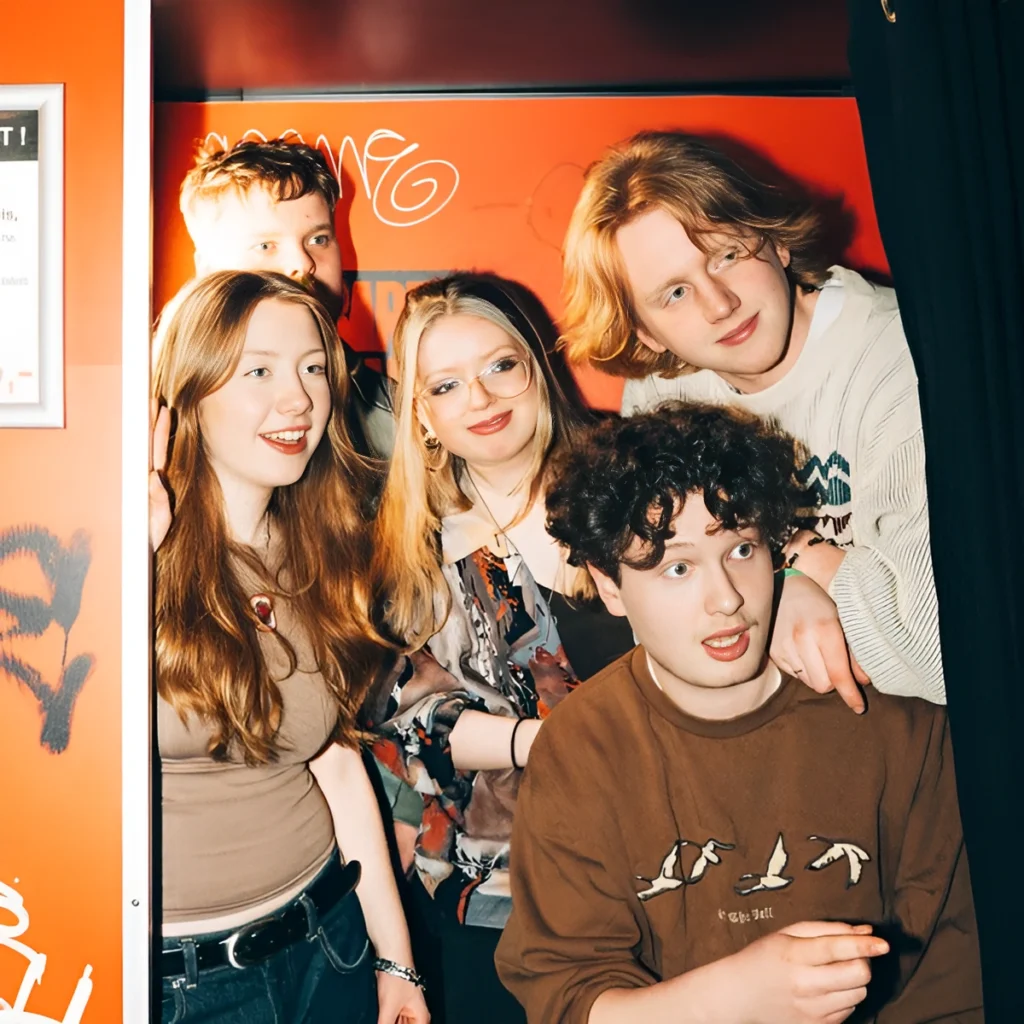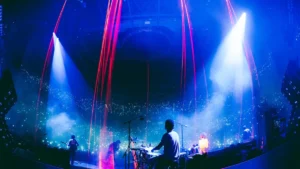

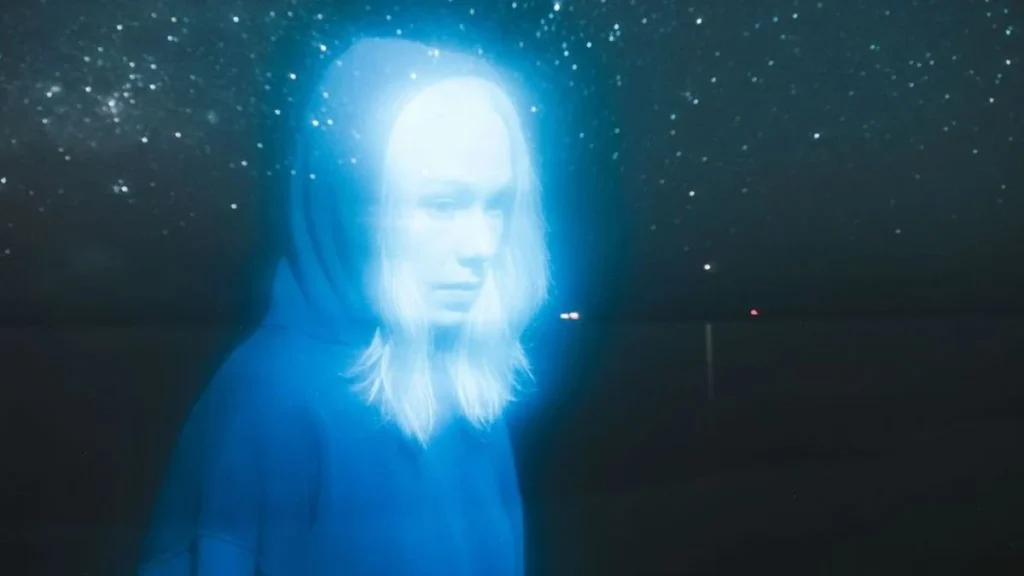
Phoebe Bridgers, whose new album is being premiered inside more than 40 planetarium domes.
Phoebe Bridgers, whose new album is being premiered inside more than 40 planetarium domes.
The safest place to put an unreleased album in 2026 turns out to be a room where nobody can see their own hands. Phoebe Bridgers is playing Lost Weekend in full at more than 40 planetariums around the world before it comes out on Friday 14 August, and every one of those sessions is phone-free.
It is a strange, expensive and genuinely novel way to roll out a record, and it solves a problem the industry has been losing to for a decade. An album played to a public audience four days early normally leaks within the hour. A dome with the lights off and no screens allowed does not give a phone anything useful to point at.
What Actually Happens Under the Dome
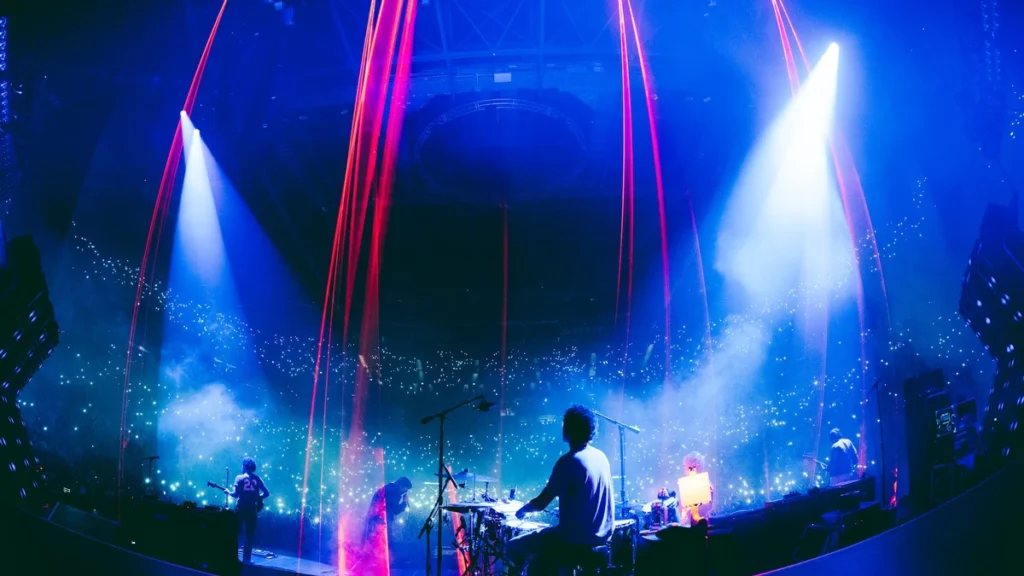
The sessions began on Monday 10 August and run through release week. Each one, in the words of the announcement quoted by JamBase, “pairs the album with one of two original visual accompaniments”: a custom dome show built by the night-sky photographer Babak Tafreshi, or an immersive laser show produced by Laser Fantasy.
Which of the two you get depends on the building. Consequence notes that screening schedules, ticket availability and presentation formats all vary by venue, which is what happens when a rollout is routed through science museums rather than a promoter’s circuit. These are not concert halls with a standard rider. They are civic institutions with their own programming calendars, their own projection hardware and, in several cases, their own school bookings to work around.
Why an Album Rollout Needs a Phone Ban
The phone-free rule is the part that will get copied. Playing a finished record to thousands of people across three continents before release day is, on paper, a leak strategy rather than a marketing one. Removing screens from the room is what makes the maths work.
It also changes what the event is. A planetarium is one of the few public spaces built entirely around lying back and looking up, with no stage to face and nothing to film. An album played in that room is not background to a night out. It is the only thing happening, which is a rare condition for new music in a year when most first listens happen on a commute at half attention.
From Pop-Up Shows to Madison Square Garden
Lost Weekend is the first solo record in six years, following Punisher in 2020, and the campaign around it has escalated in a very deliberate order. Pitchfork traced the shape of it: the return started quietly with a series of surprise pop-up shows at small American venues, then she pulled off a short-notice headline show at Madison Square Garden, and announced a phone-free arena tour the following day. The album itself was confirmed on 28 July with a 16-track listing and the lead single, “Lost Boys”.
Going from unannounced club shows to an arena in a matter of weeks is the kind of move that only works when an audience has been waiting. It is the same pattern this site saw when a long-dormant band returned to UK stages after two decades: the demand had been accumulating the entire time the artist was quiet, and it arrives all at once.
Where the Domes Are
The venue list reads like a tour routed by an astronomy society. In the United States the schedule takes in the Adler Planetarium in Chicago, the Morrison Planetarium in San Francisco, the Liberty Science Center in Jersey City, the Phillip and Patricia Frost Museum of Science in Miami and the Clark Planetarium in Salt Lake City, among roughly 45 American venues.
Outside the US it spreads further than most album campaigns bother to go. The H.R. MacMillan Space Centre in Vancouver is on the list. So is the Verkehrshaus der Schweiz in Lucerne and the Planetarium at the Cite des Sciences et de l’Industrie in Paris. Scotland and Northern Ireland each have venues. Australia gets two, including the Melbourne Planetarium, and New Zealand gets four, among them the Tuhura Planetarium in Dunedin.
Separately, Spotify and the label are running an invitation-only listening event for top listeners in the Jersey City area, which is the more conventional version of the same idea and a useful reminder of what the planetarium run is not: it is open to the public and ticketed by the venues themselves.
The Record Stores Get Their Turn Too
The domes are not the whole of it. More than 300 record stores are hosting midnight listening parties on Thursday 13 August, the eve of release, which puts the album in front of two quite different crowds in the same week.
That split is worth noticing. The planetarium sessions are a controlled, seated, screenless environment aimed at people who want to hear a record properly. The midnight store parties are the older ritual, the one that predates streaming entirely, and they hand the moment back to independent retail at exactly the point in the week when it converts into physical sales.
An Arena Tour That Sold Out Before the Album Landed
The Lost Tour opens on 14 September in Indianapolis and runs through 12 December across arenas in North America and Europe. Consequence reports it is already sold out in both the United States and the United Kingdom, which is a notable state of affairs for a tour supporting a record no ticket-holder has heard in full.
Support is split by continent. Alex G opens the North American dates, while the European leg is opened by Isaac Wood, formerly of Black Country, New Road. The tour keeps the phone-free policy that the planetarium sessions run on, so the no-screens condition is not a one-off gimmick for the listening events but the operating rule for the entire campaign.
There is a film sideline too: Bridgers is making her acting debut in A24’s Primetime opposite Robert Pattinson, which suggests the quiet six years were not idle ones.
What the Planetarium Move Signals
Strip out the novelty and this is an argument about attention, and it is not only Phoebe Bridgers who has it. Streaming has made new albums instantly available and almost impossible to make anyone sit still for. The response from the biggest acts has generally been scarcity of a commercial kind, in the form of variant vinyl, exclusive editions and timed drops. Booking 40 domes and confiscating the screens is a scarcity of a different kind, and a harder one to fake: it makes the listening itself the scarce thing rather than the object.
Whether it becomes a template depends on economics nobody has published. Planetariums are not cheap to book out, the audiences are small by arena standards, and the whole exercise generates no recorded ticket revenue at the scale a tour does. What it does generate is a week of people describing an album they cannot yet share, which is the one form of promotion that a phone in the room actively destroys.
For a Phoebe Bridgers record that arrives six years after the last one, that may be the entire point. The audience has waited long enough that the first listen is worth staging properly, and the surest way to make thousands of people pay attention to 16 new songs is to put them somewhere they physically cannot do anything else.
About Author