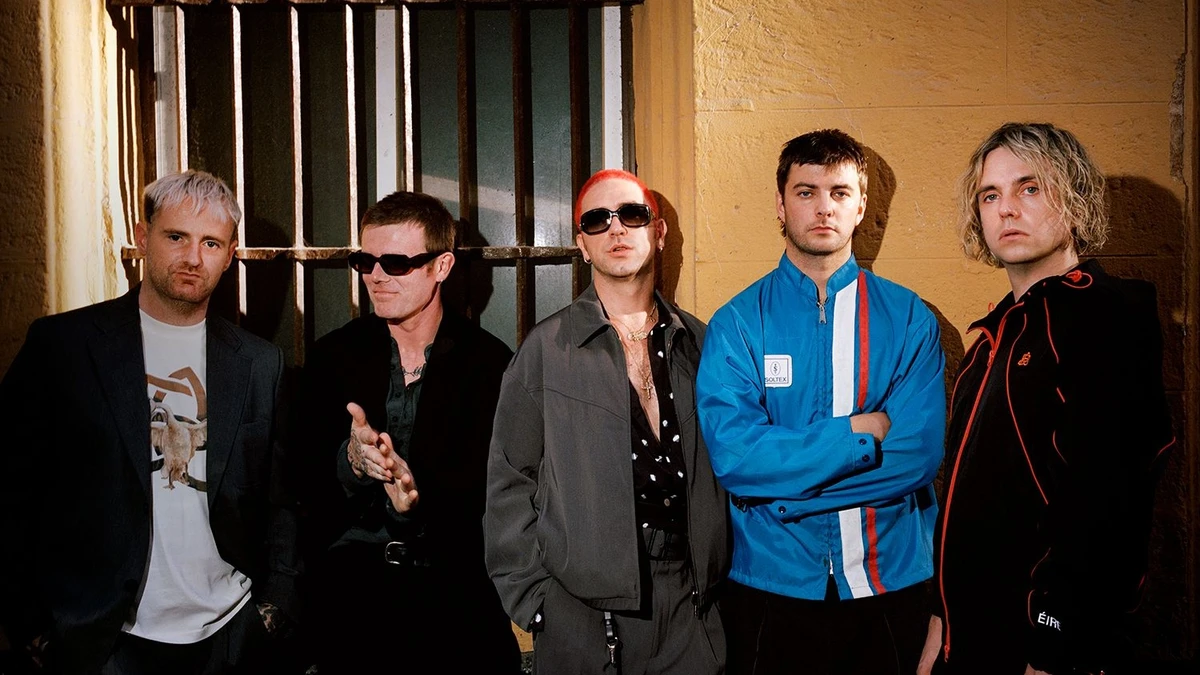

Every so often a band that has been quietly brilliant for a decade steps up a level, and 2026 is the year it happened for Wolf Alice. The north London four-piece spent the year collecting the kind of milestones most guitar bands only dream about: a chart-topping album, a BRIT Award for Best Group, and a hometown show big enough to feel like a coronation. Put together, Wolf Alice in 2026 reads like the moment a cult favourite finally became a headline act.
Here is how the year unfolded, and why it matters for anyone who cares about British indie rock.
A Band That Grew Up in Public
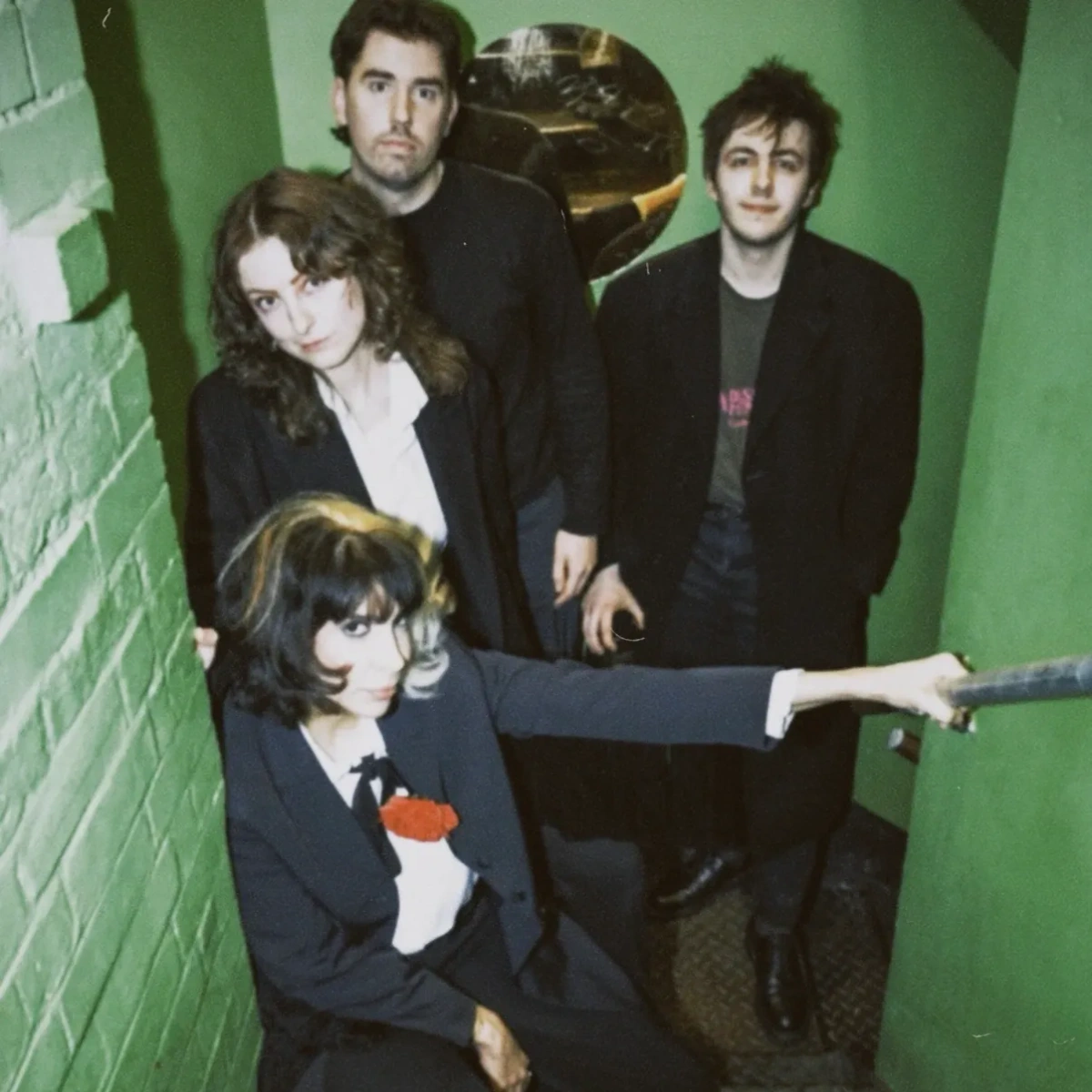
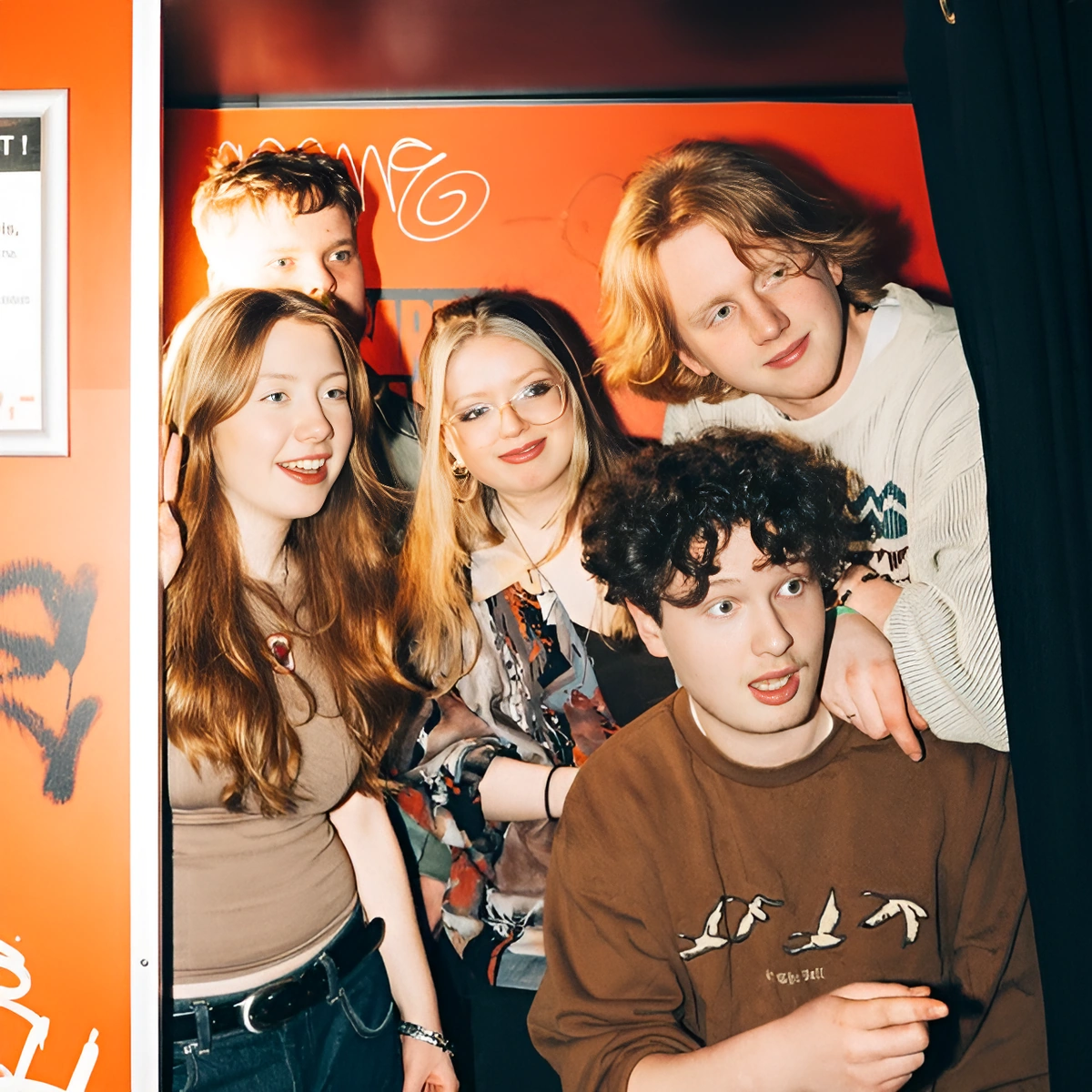
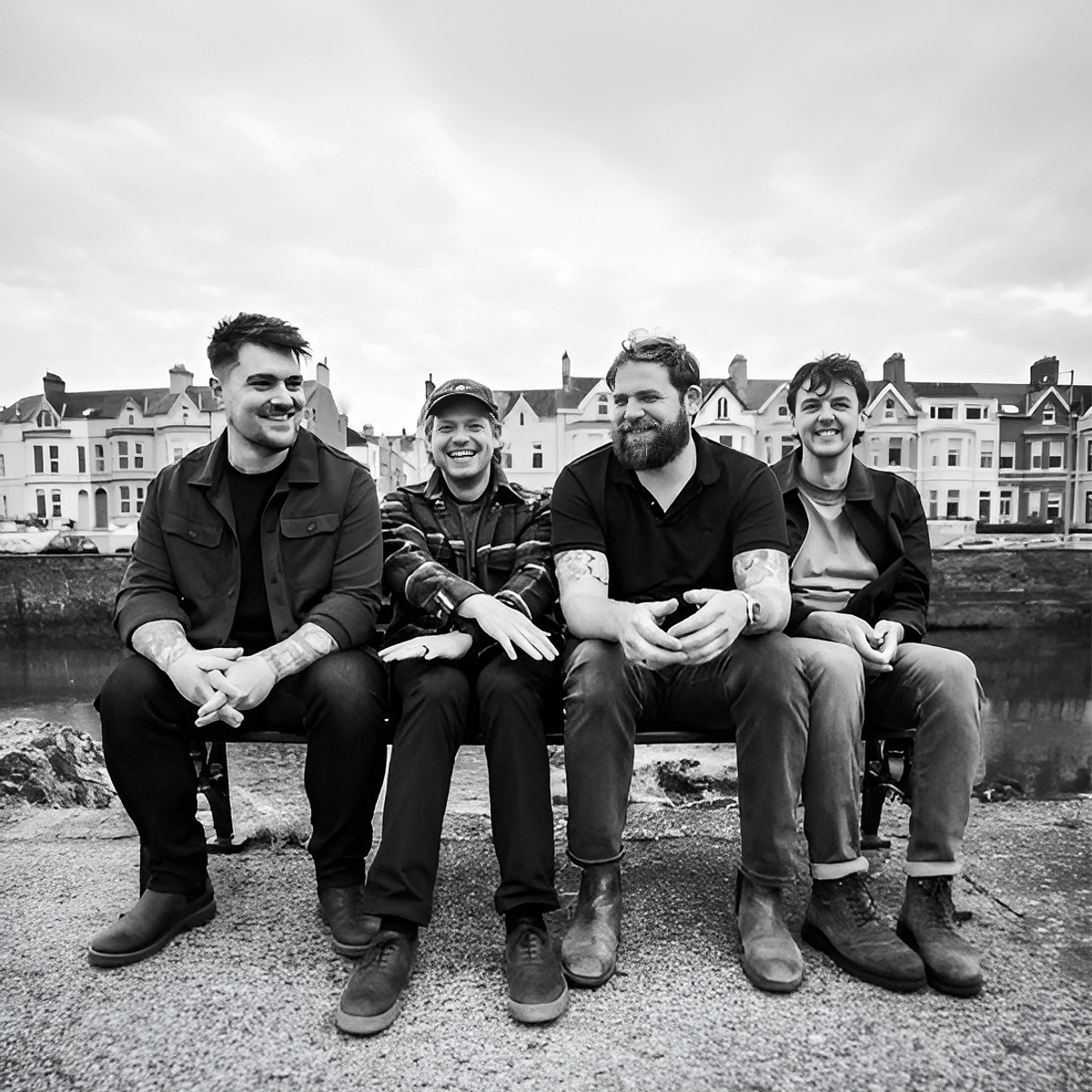
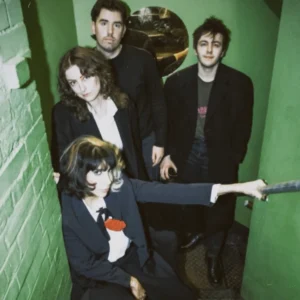
Wolf Alice have never been an overnight story. Fronted by Ellie Rowsell and rounded out by Joff Oddie, Theo Ellis and Joel Amey, the band emerged from north London in the early 2010s and built a following the slow way, through relentless touring and three studio albums that each widened their range. By 2026 they had the rare thing a lot of buzz bands never earn: a real, devoted audience that grew up alongside them. That patience is exactly what made this year land so hard.
The catalogue tells the story. Their 2015 debut My Love Is Cool announced a band with range to burn; Visions of a Life (2017) won the Mercury Prize and proved it was no fluke; and Blue Weekend (2021) topped the chart and pushed them firmly toward the mainstream. Each record raised the ceiling a little higher, so that by the time album four arrived, the audience was primed for a breakthrough.
The Clearing Changed Everything
The turning point was The Clearing, the band’s fourth studio album, released on 22 August 2025. It debuted at number one on the UK Albums Chart with just over 30,000 units, giving Wolf Alice their second consecutive number-one record. Produced by Greg Kurstin at his Los Angeles studio and trailed by singles including “Bloom Baby Bloom,” “The Sofa” and “White Horses,” it marked a bold, widescreen shift in the band’s sound, and a move to new label homes at RCA and Columbia. Critics agreed: NME handed it five stars and called it the band’s boldest, most striking record yet, and it landed a Mercury Prize shortlist nod that September.
An album that good does not just win reviews; it resets what a band can aim for. The Clearing gave Wolf Alice the momentum that turned the rest of the year into a victory lap.
Recorded with Kurstin in Los Angeles, The Clearing leaned into warmth and space rather than noise, a widescreen, classic-rock-tinged sound that gave Rowsell’s writing room to breathe. It was a deliberate step away from the band’s scrappier early work, and the gamble of switching labels to RCA and Columbia looked instantly vindicated when it went straight to the top.
The praise went beyond the headline score. With a Metacritic average around 80, reviewers reached for classic reference points, with Rolling Stone likening its songcraft to Carole King and Stevie Nicks, while the singles run from “Bloom Baby Bloom” through “The Sofa” to “Just Two Girls” showed a band comfortable moving between stadium-sized hooks and intimate confessionals.
A BRIT Win in Manchester
That momentum paid off at the 2026 BRIT Awards, held on 28 February at Manchester’s Co-op Live, the first time the ceremony was staged outside London. Wolf Alice went in with three nominations, including Album of the Year, which went to Olivia Dean, and walked away with the big one for a guitar band: Best Group. They also performed “The Sofa” on a living-room set, dancers spilling out of an actual sofa, in one of the night’s most talked-about moments.
Ellie Rowsell used her time on stage to point past the trophy, using the platform to highlight the wave of grassroots venue closures that has hit the UK’s live scene, the same small rooms where bands like Wolf Alice learn their craft. It was a reminder that the band has never forgotten where it came from, which made everything that followed feel earned.
Coming Home to Finsbury Park
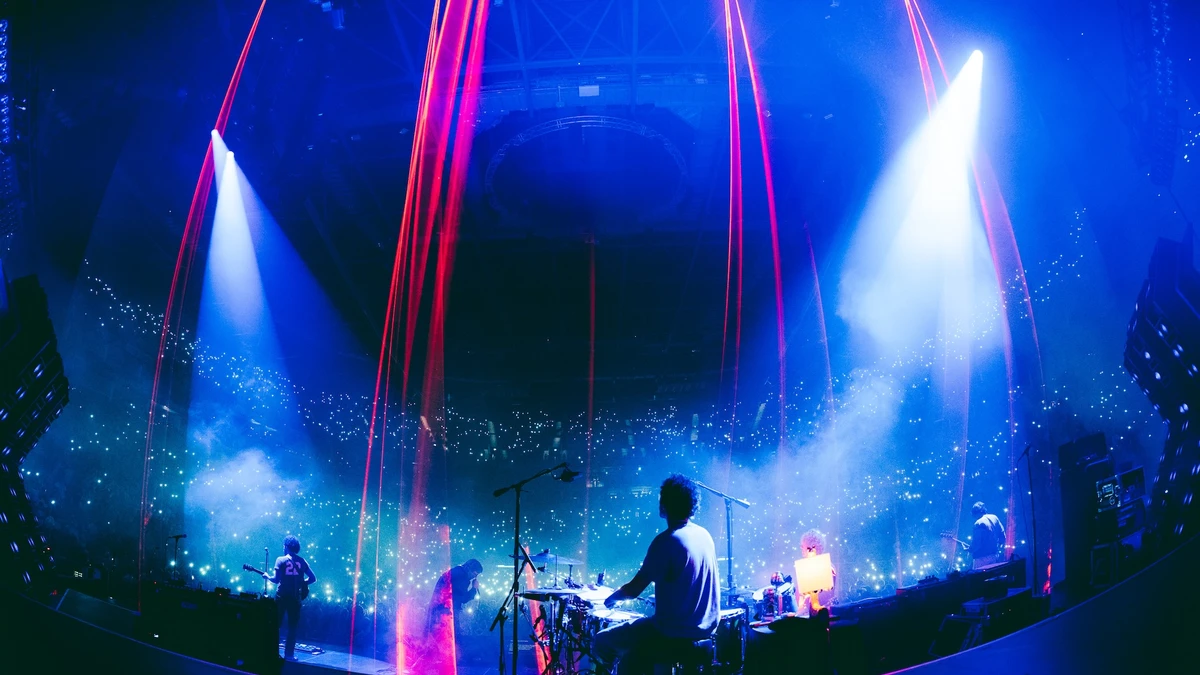
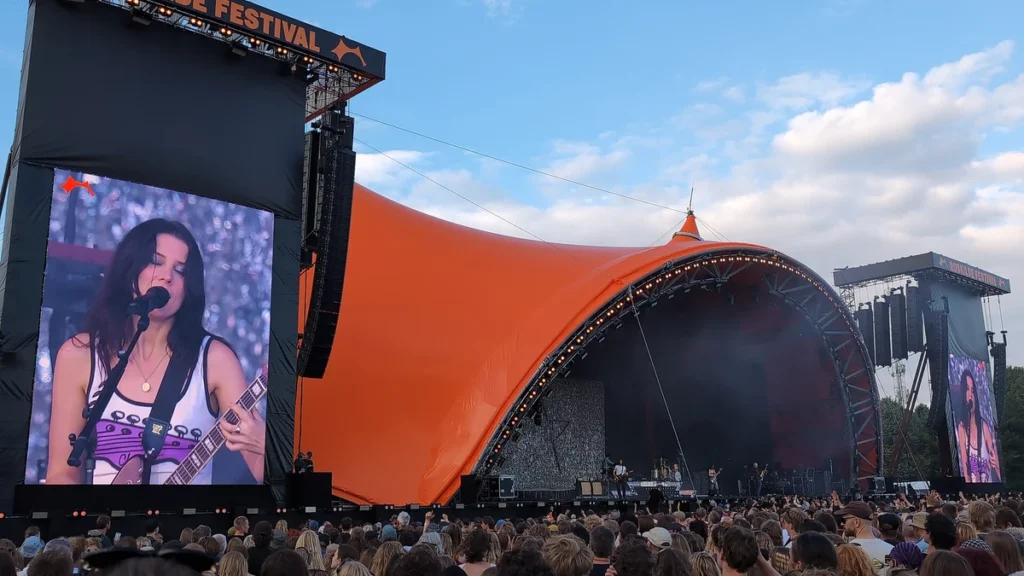
If the BRITs were the trophy, the homecoming was the heart. On 5 July 2026 Wolf Alice headlined London’s Finsbury Park, the biggest headline show of their career and, for a band born in north London, a genuine homecoming. “FINSBURY PARK we’re comin home,” they wrote when the show was announced, and the bill they assembled underlined their new status as scene leaders: support came from The Last Dinner Party, Lykke Li, Rachel Chinouriri, Keo and Florence Road, a genuinely stacked lineup of the current British wave.
Headlining a park show is the traditional rite of passage from big band to institution. Doing it in your own city, in front of the crowd that has followed you from tiny venues, is about as good as it gets.
A Finsbury Park headline is not a booking any band can make; it is reserved for acts who can shift tens of thousands of tickets on their name alone. That Wolf Alice cleared that bar, and did it at home, is the clearest sign yet of how far they have travelled from the small club shows where they started.
A Summer of Festival Sets
Finsbury Park was the centrepiece, but it was far from the only date. Across 2026 Wolf Alice have been everywhere the British summer sends a headline band, from festival top-billings at Tramlines, Kendal Calling and the Eden Sessions to marquee appearances at TRNSMT, Mad Cool and NOS Alive, plus earlier career-highlight shows at Wembley’s OVO Arena and the Royal Albert Hall for the Teenage Cancer Trust series. It has been the kind of packed, high-stakes calendar that only bands operating at the very top attempt, much like the festival-season run we covered when IDLES took over the 2026 circuit.
For fans, it has meant something rare: a beloved band at the peak of its powers, playing the biggest stages of its life, with the new songs to justify every one of them.
Why 2026 Is Wolf Alice’s Year
It is worth stepping back to see the shape of it. In a single calendar year, Wolf Alice released a number-one album, won the biggest group prize in British music, and headlined a hometown park, three achievements most careers spread across a decade, if they arrive at all.
Plenty of bands have a good year. What sets Wolf Alice in 2026 apart is how completely the pieces fit together: a career-best album, the industry recognition to match, and a live run that turned all of it into shared, in-person moments for the people who have been there since the start. It is the sound of a decade of graft paying off at once. If British indie rock has felt short on true headline acts, Wolf Alice have just made the case, loudly, that they are one of them, and 2026 is the year the rest of the world caught up.
For a scene often told its best days are behind it, that is a genuinely galvanising story, and a reminder that the path from small rooms to the top of the bill is still open to any band with the songs to walk it.
About Author